Choosing China’s best electric cable supplier requires more than comparing online prices. It demands practical checks, technical judgment, and evidence from real projects. A reliable supplier should explain conductor materials, insulation grades, voltage ratings, temperature limits, and manufacturing tolerances clearly. Vague answers deserve caution.
The phrase “Cable Electric Cable” may appear in product searches, but professional buyers need more than keywords. They should request factory profiles, quality certificates, test reports, and recent customer references. A serious manufacturer can provide samples for inspection. Examine the copper surface, jacket uniformity, printing clarity, and packaging strength. Small details often reveal larger production habits. Ask whether testing covers resistance, insulation performance, flame behavior, and dimensional accuracy. Independent verification can add confidence.
Cost still matters, but the lowest quotation may hide thinner insulation, inconsistent copper, or delayed delivery. Review payment terms, production capacity, warranty language, and technical support before signing an agreement. Factory audits, video inspections, and third-party testing can reduce avoidable risks. Experienced suppliers should also discuss custom colors, cable structures, export packaging, and installation conditions. Good communication is practical evidence.
No supplier is perfect. That matters.
A thoughtful selection process should record both strengths and weaknesses. One missed detail can affect installation time, maintenance costs, and safety performance. Buyers should compare complete offers, not isolated prices. With documented quality controls, transparent communication, and proven delivery experience, a Chinese electric cable supplier can become a dependable long-term partner. Still, every claim deserves verification. Reliability is demonstrated through consistent results, not confident promises.
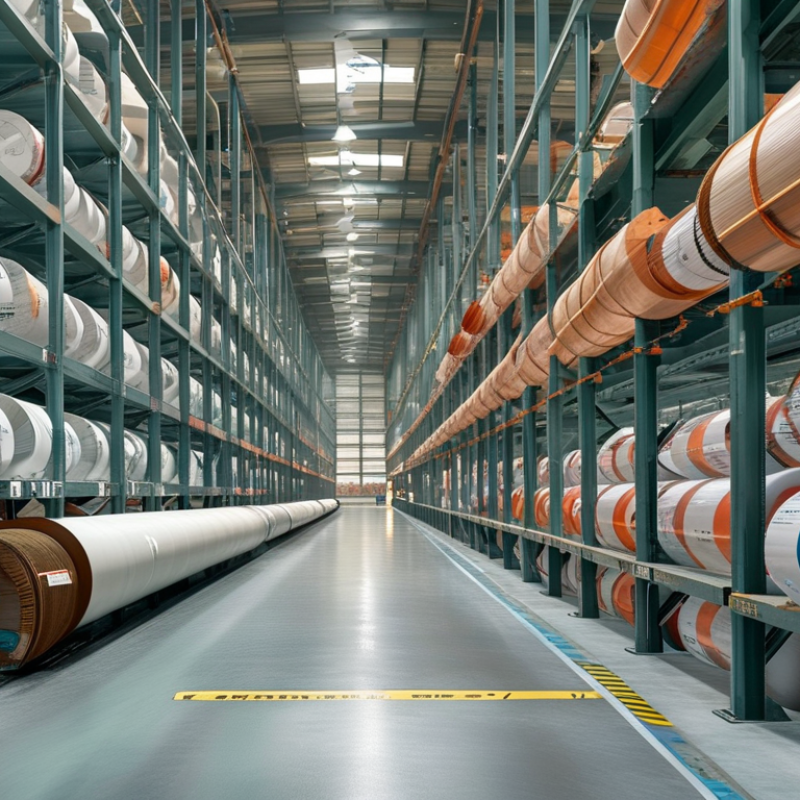
How to Choose China Best Electric Cable Supplier?
China’s electric cable supplier landscape is broad, capable, and uneven. It includes large export factories, regional specialists, and smaller custom-production workshops. The demand is significant. The IEA Electricity 2024 report recorded China’s electricity demand growth at 6.7% in 2023. The IEA Renewables 2024 report expects China to provide almost 60% of global renewable capacity additions through 2030. This expansion supports strong cable demand, but it also increases supplier selection risks.
Buyers should compare production scope, not only factory size. Ask whether the supplier controls copper or aluminum verification, insulation extrusion, conductor testing, and final inspection. Check compliance with IEC 60228 and IEC 60502-1 where applicable. Request recent test reports, calibration records, and batch-level traceability. Certificates are not enough. A polished document can still hide weak process control.
Audit the factory floor through video or an independent inspection. Look for clean extrusion lines, labeled reels, controlled storage, and visible testing equipment. Confirm the supplier’s experience with your voltage rating, installation environment, packaging, and destination requirements. Review sample cables before signing a large order. In practice, low pricing often reflects thinner insulation, flexible material substitutions, or limited testing. That assumption can mislead buyers. Lead time, corrective-action speed, and engineering communication deserve equal attention. A reliable supplier should explain failures openly, even when the answer is inconvenient.
| Evaluation Dimension | Typical Market Range or Requirement | Why It Matters | Evidence to Request | Recommended Decision Rule |
|---|---|---|---|---|
| Product Scope | Building wire, control cable, power cable, flexible cable, solar cable, and data or communication cable are commonly available product categories. | A supplier with the correct production capability can reduce outsourcing, compatibility, and quality-control risks. | Product catalogue, technical datasheets, factory photographs, and representative samples. | Select suppliers that regularly manufacture the exact cable construction required for the project. |
| Conductor Material | Copper is commonly used for high conductivity and flexibility; aluminium is often selected for lower weight and cost in larger power-cable applications. | Material choice affects ampacity, weight, installation method, voltage drop, and total cost. | Conductor grade, cross-sectional-area report, resistance test, and material traceability records. | Reject quotations that specify only “copper cable” or “aluminium cable” without conductor class and resistance data. |
| Insulation and Sheath | PVC, XLPE, rubber, and halogen-free compounds are widely used, depending on temperature, flexibility, fire, and environmental requirements. | The insulation system determines temperature rating, mechanical durability, smoke behavior, and service life. | Material name, temperature rating, flame or smoke test results, and compliance documentation. | Match the compound to the installation environment rather than choosing solely by price. |
| Voltage Rating | Low-voltage cable is commonly specified up to 1 kV; medium-voltage products are often designed above 1 kV and require additional insulation and testing controls. | Incorrect voltage selection can create safety, certification, and installation problems. | Rated-voltage statement, construction drawing, routine-test report, and applicable product standard. | Require the supplier to confirm voltage, insulation thickness, and test voltage in writing before ordering. |
| Compliance Standards | Common market references include Chinese GB/T standards, IEC standards, and destination-market requirements such as CE, UKCA, or UL-related specifications where applicable. | A cable may be technically suitable but still unacceptable if it does not meet the importing market’s rules. | Current certificates, test reports, standard editions, and a model-to-certificate cross-reference. | Verify that certificates cover the exact cable model, conductor size, voltage, and construction being purchased. |
| Factory Quality System | A mature manufacturer should maintain documented incoming-material, in-process, and final-inspection controls; ISO 9001 certification is a useful reference but not a substitute for product testing. | Process control helps maintain conductor size, insulation thickness, electrical performance, and consistency between batches. | Quality manual, inspection plan, calibration records, nonconformance procedure, and recent audit report. | Prefer suppliers that can show traceable inspection records for the same product family. |
| Testing Capability | Routine checks commonly include conductor resistance, dimensional inspection, insulation resistance, voltage withstand, and visual or marking inspection. | Testing verifies that the delivered cable matches the approved design and agreed standard. | Equipment list, calibration certificates, sample test reports, and independent laboratory reports when required. | Use pre-shipment inspection for critical projects and request batch-specific test results. |
| Minimum Order Quantity | Standard stock items may support relatively small trial orders; custom colours, constructions, packaging, and private markings usually require higher quantities. | MOQ affects working capital, inventory exposure, and the feasibility of product testing. | Written MOQ by cable model, size, colour, packaging format, and customization level. | Start with a documented trial order before committing to large volumes or customized tooling. |
| Lead Time | Standard products may be available in approximately 1–4 weeks; customized production commonly requires about 4–8 weeks, excluding shipping and exceptional material delays. | Lead time influences project scheduling, safety stock, and the risk of production interruption. | Production schedule, raw-material availability, packaging plan, and previous delivery records. | Obtain a production lead time and a shipping transit time as separate commitments. |
| Packaging and Logistics | Cable is commonly supplied on coils, reels, or drums; packaging must protect against moisture, impact, deformation, and incorrect length identification. | Poor packaging can cause damage, handling problems, and measurement disputes during transportation. | Packaging drawings, reel dimensions, gross weight, cable-length markings, and loading photographs. | Approve the packaging method before production and specify inspection requirements at loading. |
| Commercial Evaluation | A meaningful comparison should include conductor weight, insulation materials, test scope, packaging, inland transport, freight, duties, and payment terms—not only the quoted unit price. | The lowest unit price may hide thinner insulation, lower conductor content, excluded testing, or higher delivery costs. | Itemized quotation, Incoterms, payment terms, validity period, material assumptions, and landed-cost calculation. | Compare at least three technically equivalent quotations using the same specification and delivery basis. |
| Supplier Verification | A reliable sourcing process should confirm legal identity, production location, export capability, product ownership, and financial or operational stability. | Verification reduces the risk of trading-company misrepresentation, unauthorized subcontracting, inconsistent quality, and delivery failure. | Business registration, factory audit, video inspection, sample approval, references, and pre-shipment inspection agreement. | Give higher scores to suppliers that pass document review, sample testing, factory verification, and a controlled first order. |
Note: The ranges above are indicative procurement benchmarks for China-based electric-cable sourcing. Final requirements should be confirmed against the applicable product standard, destination-market regulations, installation conditions, and project specifications.
State voltage, current, frequency, conductor material, core count, and cable length. Describe installation conditions clearly. Mention underground placement, cable trays, machinery, moisture, heat, movement, and chemicals. Include drawings, delivery locations, operating temperatures, certificates, tolerances, testing, and packing requirements. Details matter.
Send every supplier the same written specification. Ask them to confirm each requirement in writing. Check whether conductor sizes are nominal or actual. Compare insulation thickness, test methods, delivery terms, and packaging. A general catalogue is not enough.
Request recent routine test reports and material data. Check conductor resistance, insulation thickness, voltage withstand, flame performance, and aging results. Ask for batch numbers and production dates. The test method should be explained clearly. Vague answers deserve caution.
Visit the factory when practical, or request a live production video. Look for calibrated equipment and sealed raw-material storage. Inspect extrusion lines, worker training, maintenance records, and reel inspections. Clean floors help, but they prove little alone. Records show habits.
Ask about production lines, monthly output, copper-processing capability, and backup equipment. Compare capacity claims with shipping records and utility information. Ask how peak orders and copper-price changes are managed. A large factory may still miss deadlines. Capacity figures can be optimistic.
Samples should match the intended conductor, cross-section, insulation, voltage, and installation environment. Measure diameter and flexibility yourself. Compare the sample with its test report and production batch. A selected sample may not represent normal output. That still happens.
Write down standards, dimensions, tolerances, conductor resistance, insulation performance, packaging, and delivery dates. Define inspection procedures and the response to failed inspections. Keep approved samples with signed specifications and photographs. Use payment milestones for early orders when suitable. Do not guess.
Monitor several shipments instead of trusting one successful delivery. Review defects, corrective actions, communication, warehouse conditions, and production changes. Require written approval before changing materials, factories, or processes. Independent inspection can help with large orders. I might still overlook something. Keep records.
Choosing the best electric cable supplier in China requires a clear and systematic evaluation process. Begin by understanding the supplier landscape and identifying manufacturers with experience in your target market and application. Define your cable specifications, including conductor material, insulation, voltage level, dimensions, environmental resistance, testing requirements, and expected order volume. Clear project requirements help prevent misunderstandings and make supplier comparisons more accurate.
Next, assess each supplier’s product quality, certifications, production equipment, testing procedures, and manufacturing capacity. Compare pricing together with communication efficiency, lead times, packaging, logistics support, warranty terms, and after-sales service rather than focusing only on the lowest quotation. Before placing a large order, request samples and verify their performance through suitable inspections. Carefully review technical documents, payment terms, quality responsibilities, delivery schedules, and contract conditions. A reliable Cable Electric Cable supplier should demonstrate consistent quality, transparent communication, stable production, and the ability to support long-term cooperation. Regular performance reviews can further ensure dependable supply for future projects.

 Linde Cable